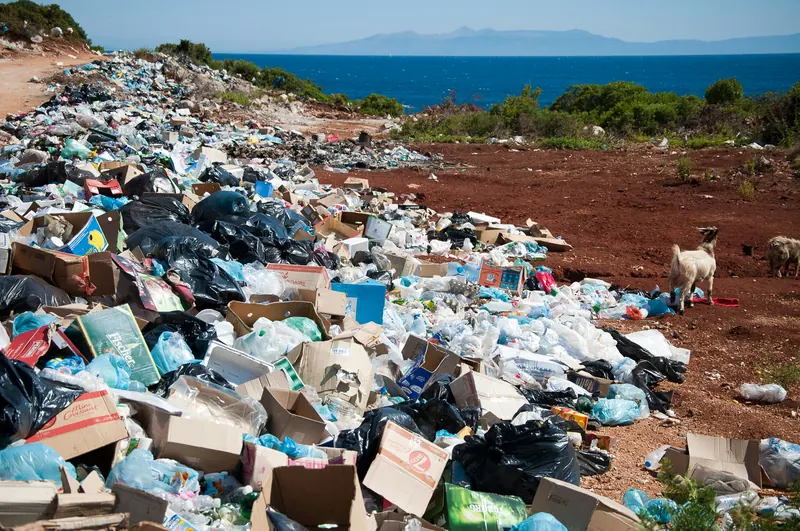
How the HP14 property of waste is determined
The requirements of Regulation 2017/997 and the practical test chain: when HP14 assessment is required, how EC50 limit values are read and what to submit to the authority.
Read the article →
EN ISO 6341 · 48 h
An acute ecotoxicity test with Daphnia magna shows the real effect of a sample on living organisms within 48 hours.
01 — Why a biological test
Chemical analysis
Biological test
02 — Sectors
Five situations where acute ecotoxicity data are required by regulation or help you make a decision before an authority asks for it.

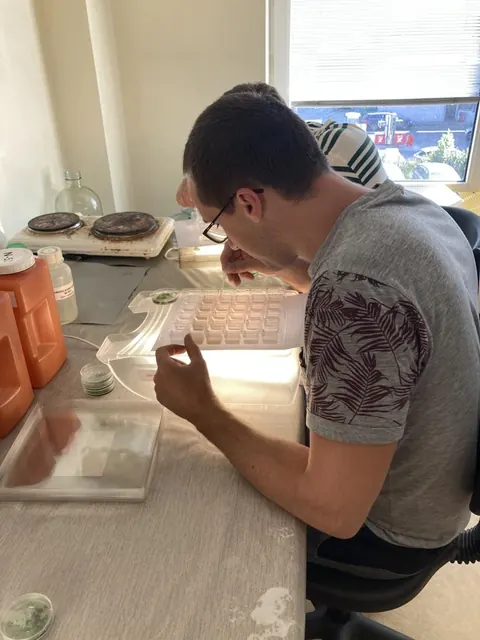
Regulation (EU) 2017/997 provides for HP14 assessment through ecotoxicity tests with aquatic organisms. The 48-hour Daphnia magna test to EN ISO 6341 is one link in the test chain, and the resulting EC50 value is compared with the limit values set in the regulation.
03 — Samples
domestic and industrial
and its concentrates
aqueous eluates
from treatment plants
and sediments
pure compounds
detergents, additives
rivers, lakes, ponds
from industrial sites
leachable fractions
04 — Process
01 · Day 0
We agree on the sample type, quantity, dilution series and purpose. You receive a quote with price and turnaround.
02 · Days 1–2
The sample is delivered chilled in a sealed container. At the laboratory it is registered and its pH, oxygen and conductivity are checked.
03 · 48 h
Neonates less than 24 hours old are exposed to a dilution series. Immobilisation is recorded after 24 and 48 hours.
04 · Days 5–7
You receive an accredited laboratory test report with the EC50 value, method reference and conclusion, ready to submit to the authority.
05 — In practice
CASE 01
A company has a waste of unclear composition. An ecotoxicity test provides a sound basis for classifying it as hazardous or non-hazardous.
CASE 02
Activated sludge is dying at the treatment plant. The test shows which industrial stream is toxic.
CASE 03
A manufacturer needs ecotoxicity data for the safety data sheet and CLP classification.
CASE 04
After a spill, you need to know whether the water is still toxic and when conditions returned to normal.
CASE 05
Periodic leachate monitoring shows whether the collection system works and whether the leachate poses a risk to the environment.
CASE 06
Before investing, two treatment options are compared to see which reduces the toxicity of the discharge more.
An accredited laboratory report is accepted by authorities and can be used in official files.
A single EC50 value instead of interpreting dozens of chemical parameters.
The test takes 48 hours; the report is ready within 5–7 working days.
Cheaper than a broad chemical analysis, and a single test is often enough for a decision.
“The most rational first step is to see whether the sample affects living organisms at all. Only then is it worth looking for the substance responsible.”
07 — Laboratory
08 — FAQ
Can’t find an answer? Write to us — we reply within one working day.
For liquids, 1 litre is usually enough; for solid samples about 1 kg, from which an aqueous eluate is prepared. We confirm the exact amount in the quote based on the number of dilutions.
The test itself takes 48 hours. We issue the report with the EC50 value within 5–7 working days of receiving the sample; in urgent cases we can shorten the turnaround.
Yes. The test is performed to EN ISO 6341 in an accredited laboratory; the report is issued in Lithuanian or English and can be submitted together with waste classification or permit documents.
EC50 is the sample concentration at which half of the test daphnids are immobilised within 48 hours. The lower the value, the more toxic the sample.
Not always. If you need to know whether a sample is toxic, a biological test is sufficient. Chemical analysis makes sense once toxicity has been found and you want to identify its cause.
09 — Enquiry
We will send you a quote within one working day. For urgent matters, call +370 686 49 168.